.png)
Why Trying to Stay Calm Isn’t Working (And What Actually Does)
Most people believe the goal is to stay calm.
To manage stress.
To control reactions.
To keep everything steady, no matter what’s happening.
And when that doesn’t work, they assume they’re doing something wrong.
But the issue isn’t that you can’t stay calm.
It’s that calm was never the goal to begin with.
Your system was not designed to stay in one state all day.
It was designed to move.
Between focus and rest.
Between activation and recovery.
Between responding and resetting.

Calm is just one state.
Not a permanent one.
When you try to stay calm all the time, you’re working against how your system actually functions.
This is why so many common approaches fall short.
You’re told to:
breathe deeply
relax your body
think differently
“just stay grounded”
And those things can help.
But only if they’re applied at the right moment.
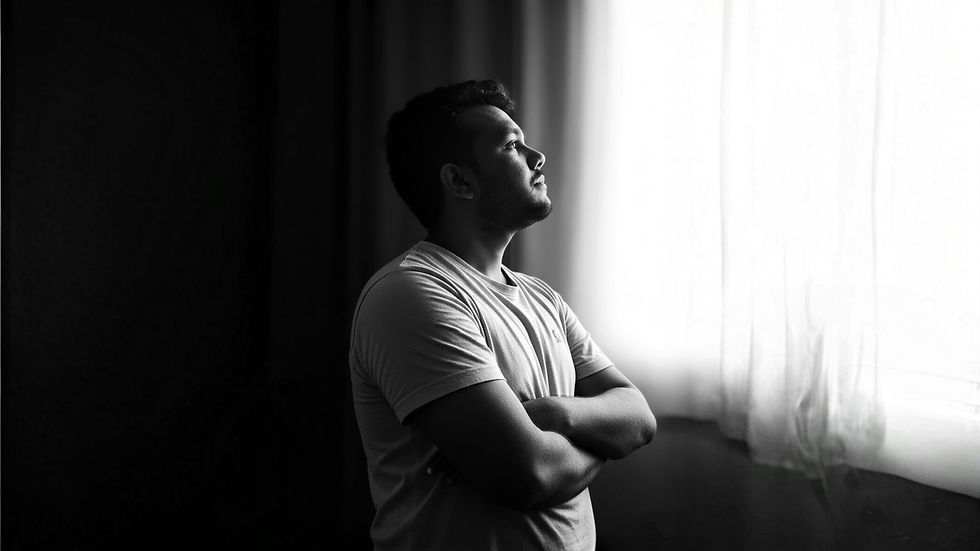
Most people are using the right tools at the wrong time.
By the time you’re trying to calm yourself down, your system has already shifted.
Your breath has changed. Your body has tightened. Your response is already building.
You’re not starting from neutral.
You’re trying to reverse something that’s already in motion.
This is where frustration builds.
Because it feels like:
the tools don’t work
the strategies don’t stick
and nothing actually changes
But what’s really happening is simpler than that.
You’re missing the moment before the shift.
The same early signals that show up before stress are the same signals that determine whether you can regulate it.
A shorter breath. A slight increase in pace. Tension in your shoulders or jaw. A quicker reaction time.
These are not problems.
They’re indicators.
And they show up before you need to “stay calm.”
When you recognize those signals early, you don’t have to force calm.
You adjust sooner.
A slower exhale actually lands. A small posture shift actually changes something. A pause actually creates space.
Not because the tools are different.
But because your timing is.
This is what most people were never taught.
That regulation isn’t about holding yourself in calm.
It’s about being able to move between states more effectively.
Flexibility matters more than control.
Because life isn’t static.
Your system will shift.
Your environment will change.
Your responses will vary.
The goal isn’t to eliminate that.
It’s to work with it.
This is where things begin to feel different.
Not because everything is calm.
But because you’re no longer reacting from the same patterns without realizing it.
You notice sooner.
You adjust earlier.
You respond differently.
And over time, that changes everything.
Most people don’t realize how early these shifts begin.
There’s a way to start seeing them sooner—and working with them differently.
→ Start with the 7-Day Nervous System Awareness Reset
To Peace and Alignment
Samantha
Join the Email List at:


Comments